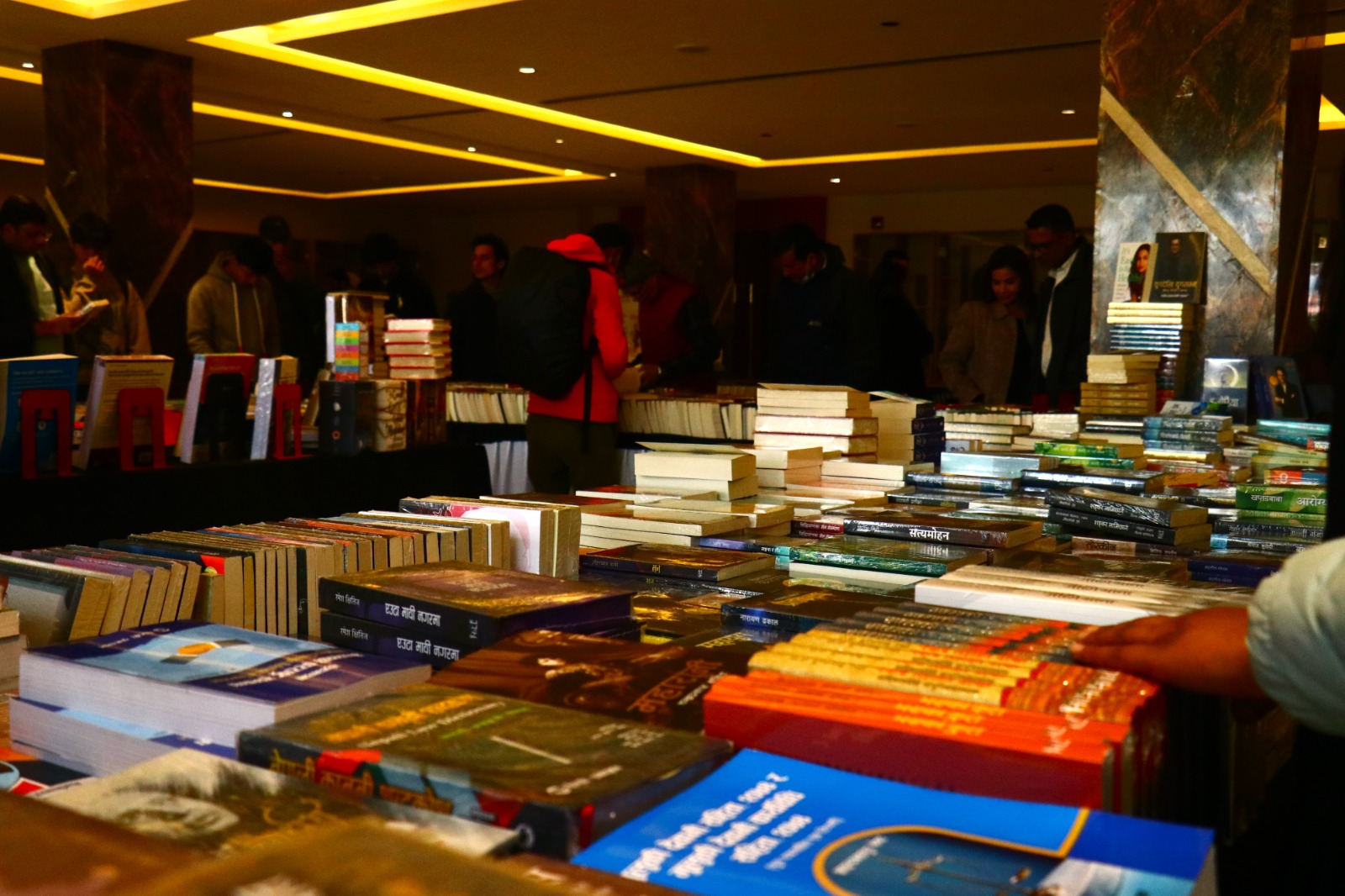
Kathmandu, 12 December,The second and concluding day of the Kitab Jatra featured a special session titled “Light, Camera, Action”, where prominent figures of Nepali cinema discussed what they read, why they read, and how reading or not reading has shaped their lives and artistic journeys. The conversation centered on one key theme: What do actors really read? And almost everyone on the panel pointed to the same answer society and people.
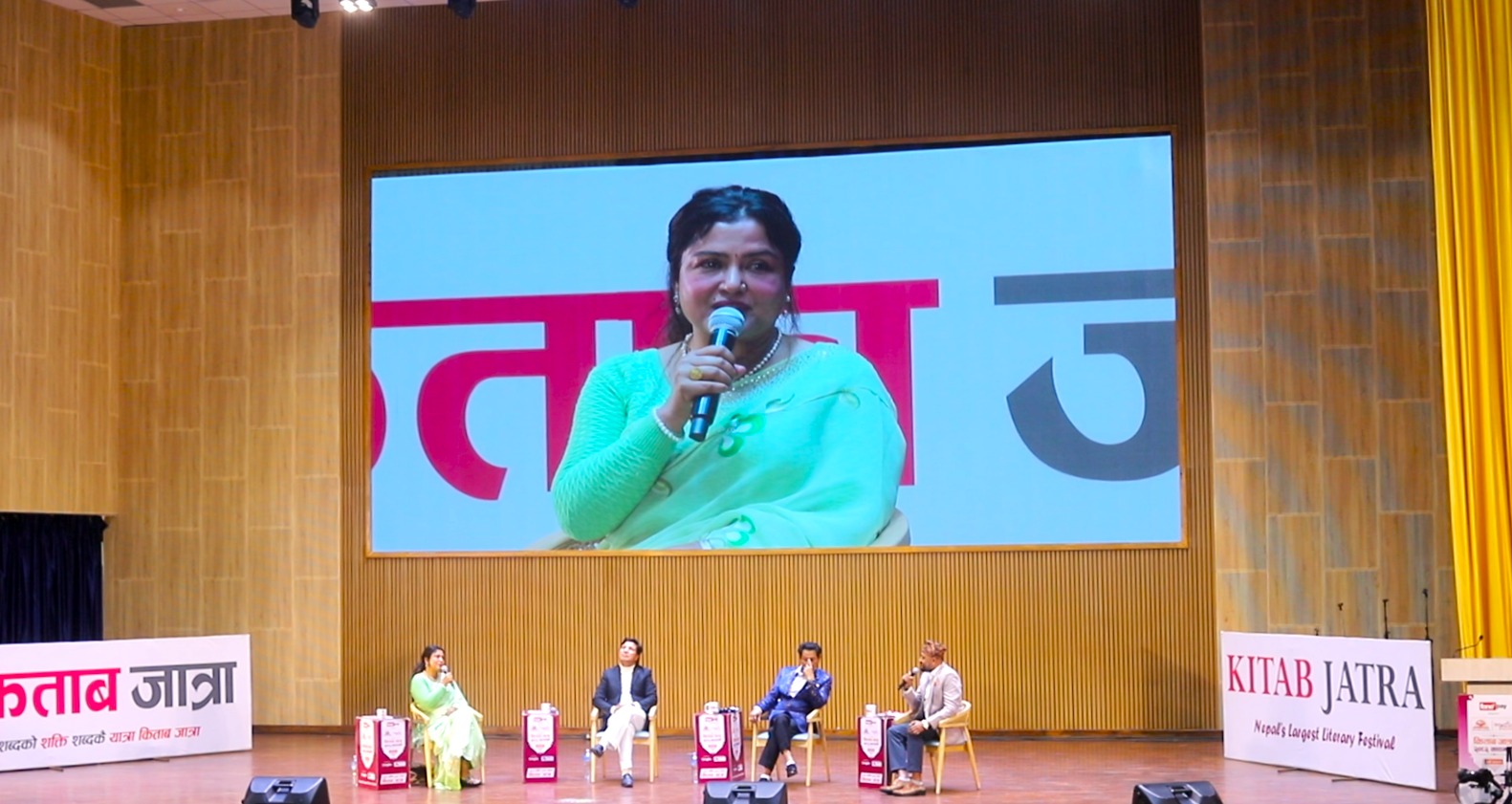
Actress Rekha Thapa shared that books and cinema, literature and film, are essentially parallel worlds. Speaking at Nepal Police Club on Friday, she said both mediums tell stories of society, which makes them deeply interconnected. Rekha said she is an avid reader, but observed that Nepali books often focus heavily on stories of struggle and hardship themes she has also portrayed in her films. “When will we get to show a society that is laughing and joyful in our books and movies?” she asked. She recalled that even though she performed well academically in her early years, her passion for the arts gradually took over. “Once you gain mastery in the field you love, success naturally follows,” she said. Rekha emphasized that the identity of a successful person should not be measured solely through academic achievement. “Do we judge the Buddha by his formal schooling? His actions transformed society and humanity. Art is a form of spiritual practice classroom education alone does not give life meaning,” she added.
-1765540030.jpeg)
Comedian and filmmaker Deepakraj Giri humorously admitted that although he loves the idea of books, he simply cannot cultivate the habit of reading them. “I want to understand people. But no matter how stressed I am, the moment I hold a book, I fall asleep,” he laughed. “Even today, reading books doesn’t excite me much. I prefer listening and watching. That’s why I enjoy reading life more than reading books.” He urged people not to waste their lives searching for abstract meanings. “Even at the moment of death, people ask what life is. Instead, they should learn how to die,” he said, adding that every individual lives a different experience, so life itself has no single definition. Deepak also reflected on his childhood, recalling that he was a weak student who often ran away from school. “I attended school maybe five days a month. Once, when the school honored me, I didn’t even have words to speak. A teacher used to beat me a lot, and remembering that, I realized perhaps her beatings made my Nepali better which is why I eventually became good at writing,” he said. “Education has immense value in life.”
-1765540568.jpeg)
Veteran actor Shiva Shrestha, now in his 72nd year, reminisced about his school days and shared that he struggled to retain anything he read. “My father enrolled me at St. Xavier’s, but I couldn’t stay there. I ran away on the second day. Even when he took me back the next day, I couldn’t continue. I changed many schools. I always sat on the last bench,” he recalled. He shared anecdotes of frequently running away from school and paying penalties, even tearing attendance sheets to escape fines. “When I tried to study, I felt sleepy. I never read film dialogues, I memorized them by hearing the director say them. I don’t remember what I read, but I remember what I hear,” Shiva said.
These candid reflections from three major personalities of Nepali cinema offered the audience an intimate glimpse into their lives, revealing how reading, listening, experiences, and personal struggles have shaped their careers and perspectives.
-1765540199.jpeg)
Photo Features:
-1765540617.jpeg)








-1780967674.jpeg)

-1767877915.jpg)