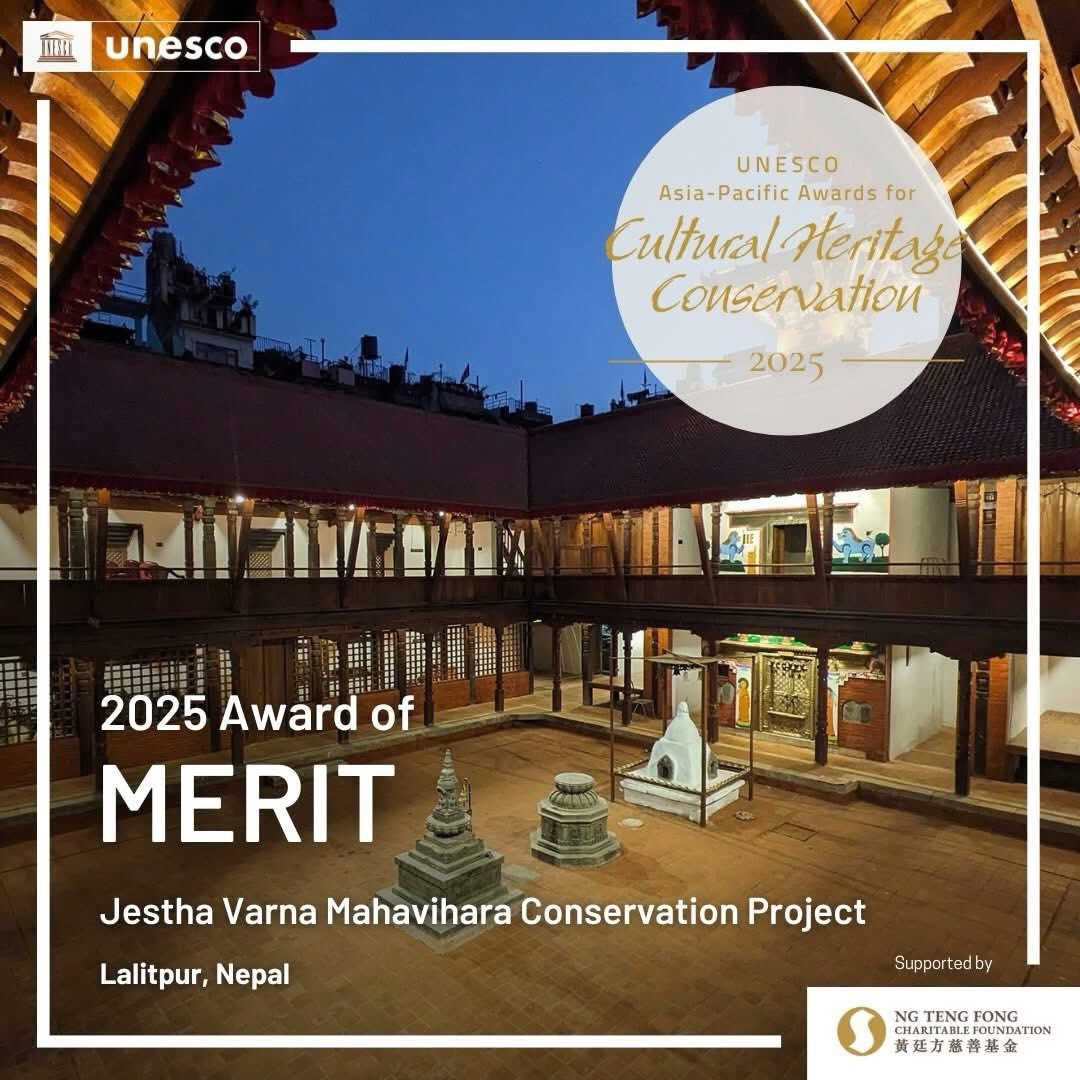
Kathmandu, Nepal has garnered international acclaim in the field of heritage conservation, with two of its cultural restoration projects earning honours at the prestigious 2025 UNESCO Asia-Pacific Awards for Cultural Heritage Conservation. The awards, announced on February 20, 2026, by the UNESCO Regional Office in Bangkok, spotlight exemplary conservation achievements across the Asia-Pacific region. This year’s winners were selected from a record 90 nominations submitted from 16 countries. The Jestha Varna Mahavihara Conservation Project in Lalitpur received the Award of Merit. The project focused on conserving the 17th-century Buddhist monastery, an important spiritual and cultural landmark for the Newar Buddhist community in the Kathmandu Valley. According to UNESCO’s jury citation, the initiative was commended for its comprehensive and sensitive approach, combining archival research, structural repairs, archaeological impact assessments, and long-term maintenance planning. The conservation work respected the monastery’s living heritage status, allowing daily rituals to continue uninterrupted and safeguarding sacred elements throughout the process. In the Mustang district, the Lowo Nyiphug Namrol Norbuling Monastery Conservation Project earned both an Award of Merit and Special Recognition for Sustainable Development. The monastery, a 500-year-old complex reflecting a distinctive blend of Tibetan Buddhist architectural traditions and local Mustang building heritage, had faced threats from climate-related precipitation and seismic vulnerabilities. UNESCO’s jury highlighted the project’s innovative integration of modern seismic-resistance techniques with traditional building knowledge, as well as the active involvement of local monastic practitioners. These elements not only bolstered the monastery’s physical resilience but also strengthened its role as a living cultural site under ongoing local stewardship.
The UNESCO Asia-Pacific Awards for Cultural Heritage Conservation, in operation since 2000, recognise outstanding efforts that preserve and revitalise the region’s cultural heritage using rigorous technical standards, community engagement, and sustainable practices. This marks a notable achievement for Nepal’s cultural sector and reinforces the nation’s global profile as a centre of living heritage that bridges ancient tradition and modern conservation practice. Heritage experts say the dual honours not only reflect technical excellence but also underscore how heritage conservation can support community resilience and sustainable development key themes in contemporary cultural stewardship.












-1780967674.jpeg)



-1767877915.jpg)